
Disponible en castellano, inglés y euskera
Belén: registro audiovisual de una lucha colectiva
Un artículo de opinión y reseña de Camila Montaño
Encuentra a Camila en Instagram y LinkedIn:

Portada: Escena de Belén. Disponible en Prime Video.
Verde y violeta. Pañuelos, brillos y flequillos. Sonrisas cómplices.
El 25 de septiembre se estrenó en Argentina Belén. Dirigida y protagonizada por Dolores Fonzi, junto a Camila Plaate. La película, inspirada en la novela Somos Belén de Ana Correa, narra la historia de una mujer privada de su libertad tras sufrir un aborto espontáneo y la de su abogada, que lucha por su libertad. Ambientada en Tucumán, una de las provincias del norte argentino, la película reconstruye un caso real.
Belén llegó al hospital por un dolor abdominal y terminó presa durante casi tres años. Condenada por un proceso judicial plagado de falencias y contradicciones, donde se asumió, sin pruebas, que se había practicado un aborto. Previa a la sanción de la Ley de Interrupción Voluntaria del Embarazo en 2021, la película expone las violencias institucionales, jurídicas y sociales que enfrentaron ella y quienes intentaron defenderla: expedientes extraviados, amenazas, prejuicios médicos, negligencias judiciales. Al mismo tiempo, pone en primera persona el control sobre los cuerpos de las mujeres, las limitaciones para decidir sobre la maternidad y los castigos para quienes no se ajustan a esos mandatos.
Pero Belén es también un relato de la potencia de la organización colectiva feminista, de mujeres y diversidades. Al igual que en la vida real, centenares de cuerpos tomaron las calles de Tucumán para exigir la libertad de Belén al canto de “Ahora que estamos juntas, ahora que sí nos ven. Abajo el patriarcado, se va a caer, se va a caer. Arriba el feminismo, que va a vencer, que va a vencer”. La absolución de Belén se logró, en gran medida, gracias a la presión del movimiento feminista, que visibilizó su caso y logró que se garantizara un tratamiento justo del proceso. Sin ese respaldo, la causa difícilmente se habría revertido o revisado.
La película nos invita a preguntarnos cuántas otras mujeres como Belén existen sin que conozcamos sus historias, o cuántas personas evitan los hospitales tras perder un embarazo, comprometiendo su salud por miedo a ser acusadas y encarceladas. Al mismo tiempo, permite ver el hilo que el caso de Belén tejió en el movimiento feminista y en su articulación popular, marcando un hito relevante en la lucha por la legalización del aborto del movimiento feminista argentino.
El estreno ocurre en un contexto distinto. Con el avance internacional de la derecha y el ascenso del gobierno “libertario” de Javier Milei en Argentina, se vive un desmantelamiento sistemático de políticas, programas e instituciones vinculadas con el género, la sexualidad y los derechos humanos. Se cerró el Ministerio de Mujeres, Géneros y Diversidad, se impulsan proyectos que buscan penalizar nuevamente el aborto y eliminar el concepto de feminicidio. Un clima lejano de la marea verde que inundó las calles entre 2015 y 2022.
Y precisamente es que en este contexto debe celebrarse el estreno de una película como Belén, que nos ofrece un recordatorio de lo que fuimos y somos capaces de lograr organizadas colectivamente. Belén nos recuerda nuestra potencia feminista y la importancia de no descuidar lo que tanto costó conseguir.
Pantalla negra. Aplausos, silbidos, llantos. Puños en alto.
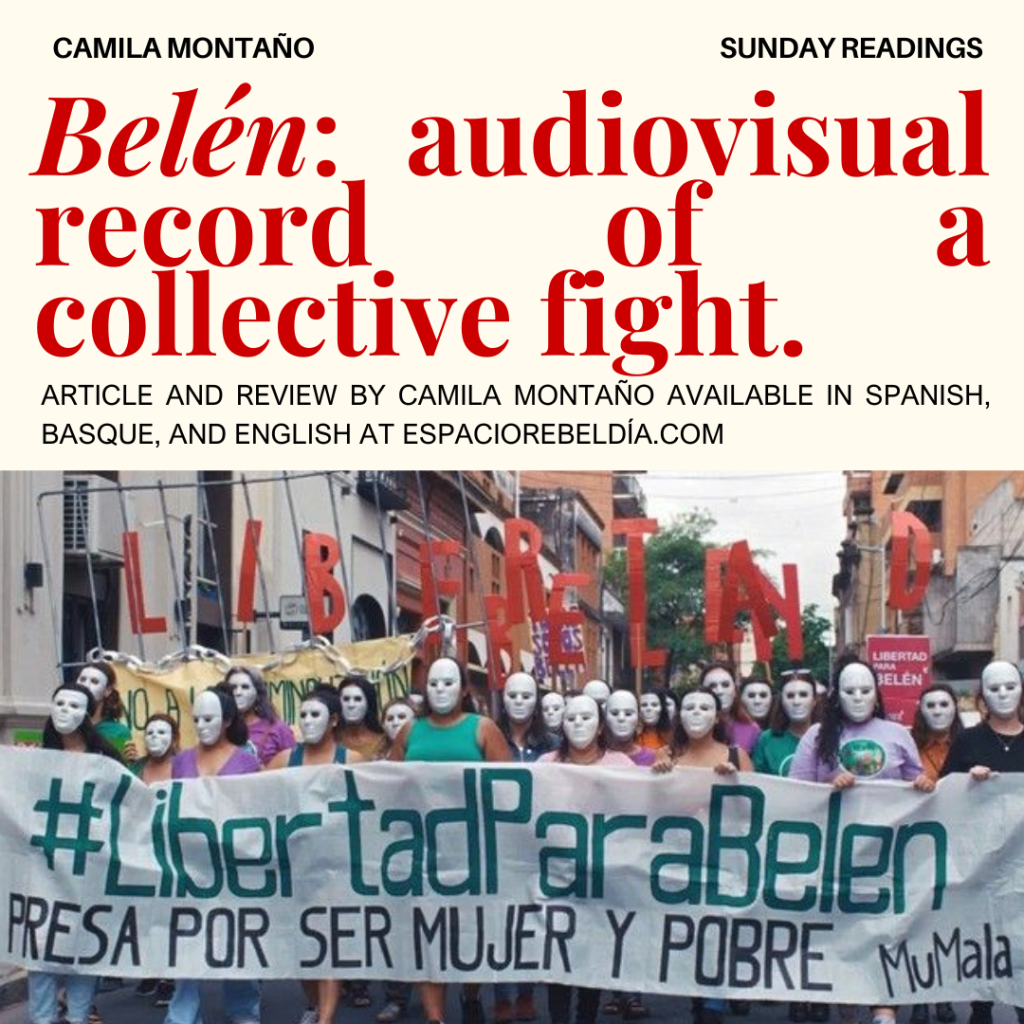
Belén: audiovisual record of a collective fight
An opinion piece and review by Camila Montaño
Find Camila on Instagram and LinkedIn:
Translation by @inkinthisorder and @batordenador
Green and purple. Tissues, sparkles, and fringes. Knowing smiles.
Belén premiered in Argentina on September 25th. Directed by and starring Dolores Fonzi, alongside Camila Plaate. The film, inspired by Ana Correa’s novel Somos Belén (We are Belén), tells the story of a woman deprived of her freedom after suffering a miscarriage and her lawyer’s story, who fights for her freedom. Set in Tucumán, one of the provinces in northern Argentina, the film reconstructs a real case.
Belén arrived at the hospital with abdominal pain and ended up imprisoned for almost three years. She was convicted in a judicial process riddled with flaws and contradictions, where it was assumed, without evidence, that she had had an abortion. Prior to the enactment of the Voluntary Termination of Pregnancy Act in 2021, the film exposes the institutional, legal and social violence faced by her and those who tried to defend her: lost files, threats, medical prejudice, judicial negligence. At the same time, it brings to the fore the control over women’s bodies, the limitations on deciding about motherhood, and the punishments for those who do not conform to these mandates.
Belén is also a story about the power of collective feminist organisation, of women and diversity. Just like in real life, hundreds of people took to the streets of Tucumán to demand Belén’s freedom, chanting “Now that we are together, now that they see us. Down with patriarchy, it will fall, it will fall. Up with feminism, it will win, it will win.” Belén’s acquittal was largely due to pressure from the feminist movement, which brought her case to public attention and ensured that the trial was conducted fairly. Without this support, it would have been difficult to overturn or review the case.
The film invites us to ask ourselves how many other women like Belén there are whose stories we do not know, or how many people avoid hospitals after losing a pregnancy, compromising their health for fear of being accused and imprisoned. At the same time, it allows us to see the thread that Belén’s case wove into the feminist movement and its popular articulation, marking a significant milestone in the Argentine feminist movement’s struggle for the legalisation of abortion.
The premiere takes place in a different context. With the international advance of the right wing and the rise of Javier Milei’s ‘libertarian’ government in Argentina, there is a systematic dismantling of policies, programmes, and institutions linked to gender, sexuality and human rights. The Ministry of Women, Gender, and Diversity has been closed, and projects that seek to criminalise abortion once again and eliminate the concept of femicide are being promoted. This climate is a far cry from the green tide that flooded the streets between 2015 and 2022.
It is precisely in this context that the premiere of a film like Belén should be celebrated, as it offers us a reminder of what we were and what we are capable of achieving when we organise collectively. Belén reminds us of our feminist power and the importance of not neglecting what we worked so hard to achieve.
Black screen. Applause, whistles, tears. Fists raised.
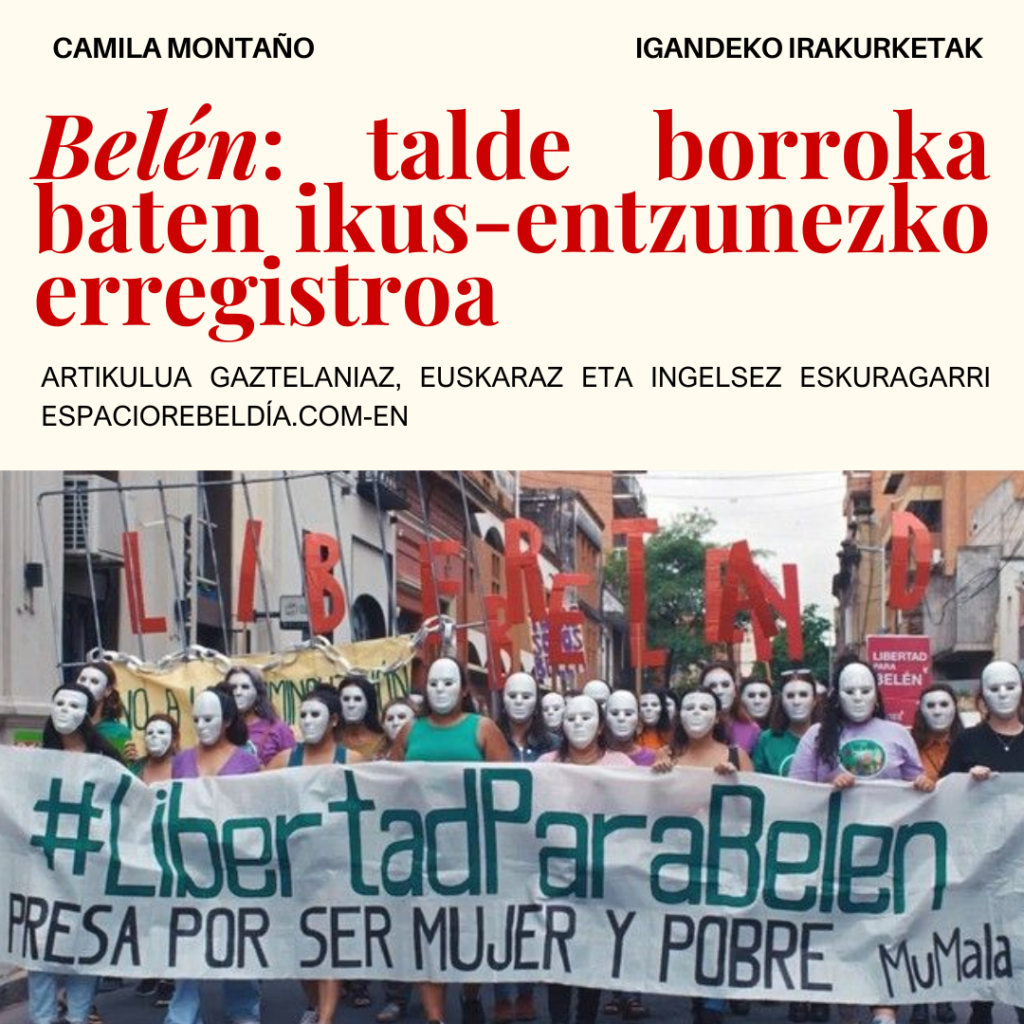
Belén: talde borroka baten ikus-entzunezko erregistroa
Camila Montañoren iritzi-artikulua eta kritika
Bilatu Camila Instagram eta LinkedIn-en:
Traducido por Udara Pascual. IG: @udarapascual
Berdea eta bioleta. Zapiak, distirak eta kopetako-ileak. Irribarre konplizeak.
Irailaren 25ean, Belen estreinatu zen Argentinan. Dolores Fonzik zuzendari eta protagonista duena, Camila Plaaterekin batera. Film honek, Ana Correaren Somos Belén eleberrian inspiratuta, bat-bateko abortu bat izan ondoren askatasuna kendu zitzaion emakume baten eta bere askatasunaren alde borrokatzen duen abokatuaren istorioa kontatzen du. Tucumanen giroturik, ipar Argentinako probintzienetako bat, pelikulak kasu erreal bat berregiten du.
Belén, sabeleko min batengatik heldu zen ospitalera, eta ia hiru urtez egon zen preso. Frogarik gabe, abortu bat burutu egin zela asumitu egin zen eta akats zein kontraesanez betetako prozesu judizial batera kondenatua izan zen. Haurdunaldia Borondatez Eteteko Legearen zigorra baino lehen, 2021ean, pelikula honek, legeak bera eta hura defendatzen saiatu zirenek aurre egin behar izan zituzten indarkeri instituzional, juridiko eta sozialak aurkezten ditu: galdutako espedienteak, mehatxuak, aurreiritzi medikuak, zabarkeri judizialak. Era berean, emakumeen gorpuek jasaten duten kontrola, ama izatearen erabakiaren inguruko mugak eta agindu horiek jarraitzen ez dituztenen zigorrak lehenengo pertsonan aurkezten ditu.
Baina Belén, emakumeen, dibertsitatearen eta talde antolakuntza feministaren potentziaren kontakizuna ere bada. Errealitatean bezala, Belenen askatasuna eskatzea helburuz, ehunka gorputzek Tucumaneko kaleak hartu zituzten, “Ahora que estamos juntas, ahora que sí nos ven. Abajo el patriarcado se va a caer, se va a caer. Arriba el feminismo, que va a vencer, que va a vencer” kantuarekin. Belenen absoluzioa, neurri handi batez, mugimendu feministaren presioari esker lortu egin zen, zeinak bere kasua ezagutzera eraman zuen, eta prozesuaren tratamendu justu bat ziurtatzea lortu zuen. Laguntza eta babes hori gabe, zaila izango zen gertakariaren errebisio bat lortu izana.
Filmak, ezagutzen ez ditugun zenbat Belen, eta hauen istorioak, existitzen diren galdetzera gonbidatzen gaitu, edo haurdunaldi bat galdu ondoren, zenbat pertsonek ospitalak ekiditen dituzten, haien osasuna arriskuan jarriz, akusatuak eta kartzelatuak izatearen beldur direlako. Horretaz gain, Belenen kasuak mugimendu feministan eta bere artikulazio popularrean josi zuen haria ikusten ere laguntzen du, Argentinako mugimendu feministaren abortuaren legeriaren borrokan gertakari garrantzitsu bat ezarriz.
Estreinaldia testuinguru desberdin batean gertatzen da. Eskuinaren aurrerapen internazionala eta Argentinan, Javier Mileiren gobernu “libertarioaren” goraldiarekin batera, generoarekin, sexualitatearekin eta giza eskubideekin lotutako programen, politiken eta erakundeen ezabaketa sistematikoa ematen da. Emakumeen, Generoaren eta Aniztasunaren Ministerioa itxi egin zen, abortua berriz ere zigortzea eta feminizidio kontzeptua ezabatzea helburu duten proiektuak bultzatu egiten dira. 2015 eta 2022 urteen artean kaleak bete zituen itsasaldi berdearen giro oso desberdina.
Eta honelako testuinguruan hain zuzen ere, Belen bezalako filmaren estreinaldia eman behar da, elkar antolatuz lortu genuena eta lortzeko gai garena gogoarazten gaituena. Belenek, gure potentzia feminista eta horrenbeste lortzea kostatu zitzaiguna zaintzen ez uztearen garrantzia birgogorarazten digu.
Pantaila beltza. Txaloak, txistuak, negarrak. Ukabilak gora.
 ESPACIO REBELDIA
Deja un comentario